• Check filters, dust, and vents first: The fastest way to improve indoor air quality at home is to start with the basics that affect airflow and particle control. Clean filters, cleared vents, and less dust can make the air feel fresher right away.
• Watch moisture and airflow: Humidity, weak ventilation, and trapped air often make homes feel stuffy and uncomfortable. Paying attention to bathrooms, kitchens, and laundry rooms can help stop problems before they spread.
• Use a simple step-by-step plan: A clear routine makes it easier to improve indoor air quality at home without missing important details. Regular HVAC care, better airflow, and smart cleaning habits all work together to support cleaner air.
Why Cleaner Air Matters at Home
When indoor air feels stale, your home can start to feel less comfortable fast. In Anaheim, fall can bring dusty days, opened windows, and extra debris that can make air inside your home feel heavier. That is why how to improve indoor air quality at home should not wait until you notice a problem.
Poor air can affect sleep, comfort, and even how often your family feels stuffy or irritated. Small issues like dirty filters, weak airflow, and trapped moisture can build up before you realize what is happening. If you want a fast place to start, our indoor air quality services can help point you in the right direction.
The good news is that many air problems can be handled with simple, smart steps. You do not need to guess what is wrong when you know what to check first. A clear plan can help you make your home feel fresher and more comfortable in a short time.
What Helps Air Feel Better
Indoor air gets worse when dust, moisture, and weak ventilation all work together. In homes across Anaheim, this can happen more often during the fall when people spend more time inside but still deal with warm days and dry air. Learning how to improve indoor air quality at home starts with the basics that keep air moving and clean.
A good filter, steady airflow, and balanced humidity can make a real difference. Regular HVAC care also matters because a system that is clogged or not working well can spread particles through the home. When your system is checked and maintained, it can move air more smoothly and help reduce common indoor pollutants.
You should also pay attention to the rooms you use most. Kitchens, bathrooms, and laundry spaces often hold more moisture and odors than other areas. By watching those spots first, you can cut down on the kind of air issues that build up quietly over time.
How to Improve Indoor Air Quality at Home
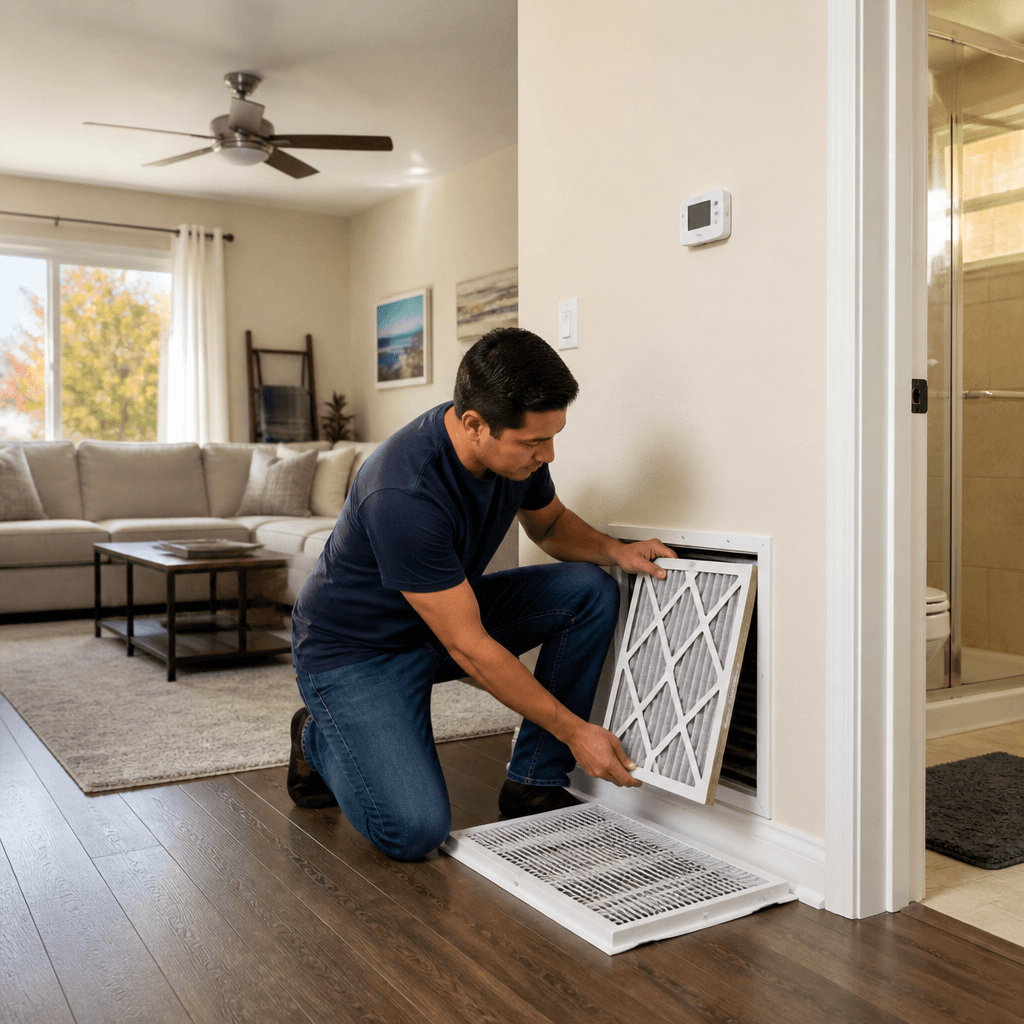
🔍 Step 1: Check Your Air Filters
Start by looking at the filters in your HVAC system and see whether they are dirty or packed with dust. Filters that are clogged make it harder for air to move through the system and can let more particles stay inside your home. Replacing them on a regular schedule helps your system do its job the right way.
🧹 Step 2: Keep Dust Under Control
Wipe down flat surfaces, vacuum rugs, and clean places where dust tends to settle, like vents and corners. Dust can build up quickly in homes with regular foot traffic, pets, or open windows. Staying ahead of it can help reduce the amount of debris floating in the air.
💨 Step 3: Make Sure Air Can Move
Open interior doors when possible and keep furniture from blocking supply or return vents. Good airflow helps stop stale air from sitting in one place too long. It also helps your HVAC system distribute conditioned air more evenly through the house.
💧 Step 4: Watch Indoor Humidity
Keep an eye on moisture in bathrooms, kitchens, and laundry areas, since too much humidity can make air feel heavy and uncomfortable. Excess moisture can also support mold growth, which can hurt air quality. Using ventilation and fixing moisture problems early helps keep the home more balanced.
🛠️ Step 5: Service Your HVAC System
Schedule maintenance so your heating and cooling equipment can be checked for dirt, wear, and airflow problems. A system that runs well is more likely to keep indoor air cleaner and more consistent. Routine care also helps catch small issues before they become bigger problems.
🌬️ Step 6: Use Exhaust Fans the Right Way
Turn on bathroom and kitchen fans when cooking, showering, or creating steam. These fans help push moisture, odors, and particles outside instead of letting them stay in the home. This is one of the easiest ways to support better air quality every day.
🧼 Step 7: Reduce Indoor Sources of Odors
Store trash properly, clean spills quickly, and avoid letting pet dander or clutter build up. Strong smells and tiny particles can stick around longer than people think. Keeping living areas clean helps the air feel fresher and lighter.
📋 Step 8: Check Problem Rooms Often
Pay extra attention to rooms that feel musty, dusty, or stuffy compared with the rest of the house. Those spaces often show the first signs of poor air movement or hidden moisture. Catching these problems early makes them easier to correct.
Common DIY Mistakes to Avoid
A lot of people want better air at home, but they rush through the process and miss the basics. Small mistakes can keep the same air problems coming back again and again. Knowing what to avoid can save time and help your home feel better faster.
Some homeowners forget to check filters until airflow feels weak or dust starts collecting fast. This usually happens because the filter is out of sight, so it is easy to overlook. Prevent this by making filter checks part of your regular home routine.
Dusting the house does help, but it will not solve blocked vents or poor circulation. People often focus on what they can see and skip the parts of the system that move air. Prevent this by checking vents, returns, and furniture placement along with cleaning.
Bathrooms, kitchens, and laundry rooms can trap damp air if fans are not used well. This happens because many people do not notice moisture until odors or stains show up. Prevent it by using exhaust fans and drying wet areas quickly.
A system that has not been serviced can collect dirt and work less efficiently over time. Many people wait until the system breaks or starts making noise before they pay attention. Prevent this by scheduling regular care before problems get bigger.
Some rooms need more attention than others, especially places that feel stuffy or musty. This often happens when homeowners focus only on main living areas and ignore hidden problem zones. Prevent it by checking kitchens, bathrooms, and laundry spaces on a regular basis.
Frequently Asked Questions
What is the best way to improve indoor air quality at home?
Yes, the best way is to combine clean filters, better airflow, and control of dust and moisture. How to improve indoor air quality at home usually starts with simple habits that help your HVAC system work more effectively. These steps can make a noticeable difference in comfort and freshness.
How often should I change my HVAC filter?
Yes, you should change it on a regular schedule based on the filter type and how much your system runs. In many homes, a monthly check is a smart habit, especially if you have pets or deal with extra dust. A clean filter helps support better airflow and cleaner indoor air.
Can humidity affect indoor air quality?
Yes, humidity can affect how air feels and how clean it stays. Too much moisture can lead to odors and mold growth, while very dry air can feel irritating and uncomfortable. Keeping humidity balanced helps your home feel healthier and more comfortable.
Does HVAC maintenance help indoor air quality?
Yes, HVAC maintenance can help indoor air quality by keeping the system clean and running the way it should. When parts are checked and airflow is not blocked, fewer particles tend to move through the home. That is one reason regular service matters so much.
Why does my house feel stuffy even when it is clean?
Yes, a home can still feel stuffy if air is not moving well or moisture is trapped inside. Dust, weak ventilation, and a dirty HVAC system can all make the air feel heavy. How to improve indoor air quality at home often means looking beyond surface cleaning and checking the systems that move air.
Stay Ahead of Indoor Air Problems
Cleaner indoor air starts with small steps that you can keep up with over time. When you pay attention to filters, airflow, moisture, and maintenance, your home can feel fresher and more comfortable. That is especially important in Anaheim during fall, when indoor living increases and air problems can show up faster.
If you stay consistent, you can prevent many common air issues before they grow into bigger concerns. We know how much comfort matters at home, and the right care can make a real difference. For more updates and helpful home care tips, follow us on Facebook.