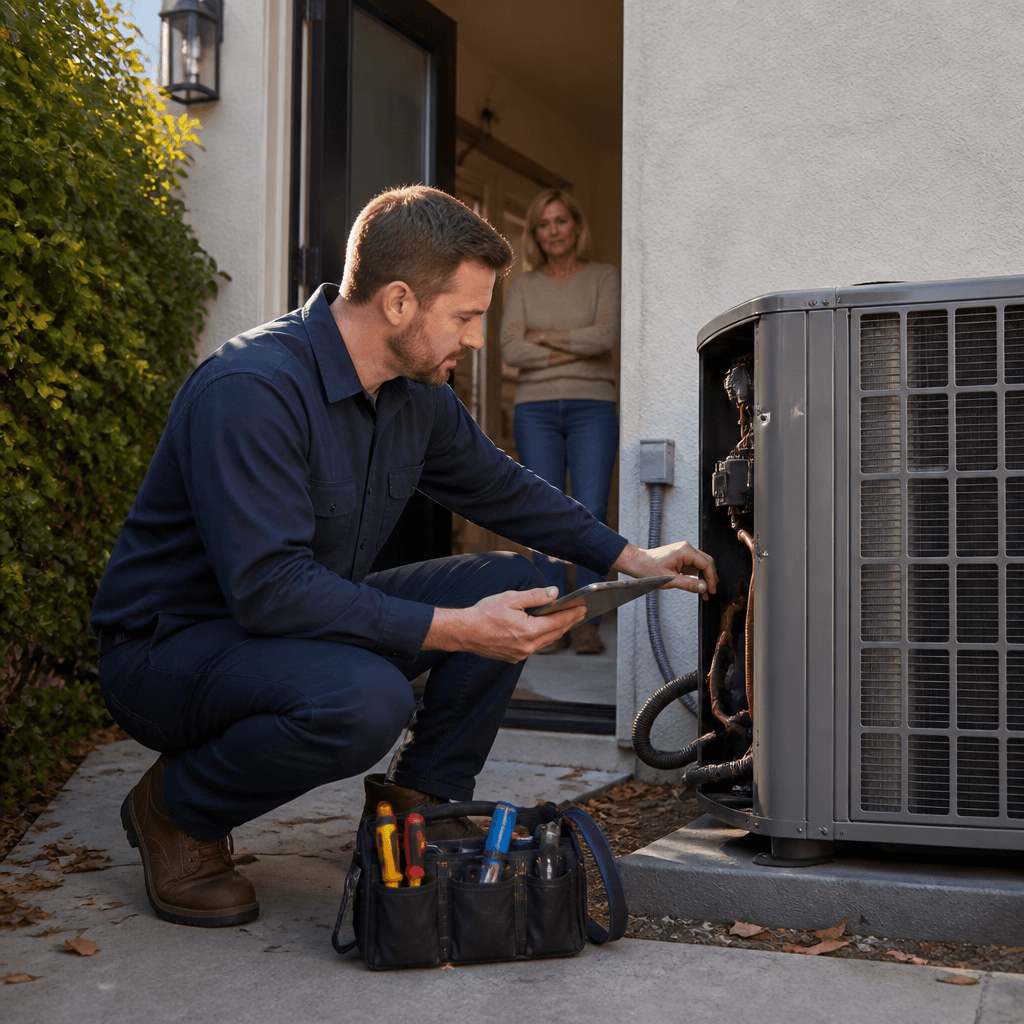
• Heat pumps move heat instead of creating it, which makes them a smart fit for many Southern California homes. In Stanton, fall is a good time to check comfort, airflow, and performance before cooler nights become routine.
• Small signs like weak airflow, uneven temperatures, longer run times, or new noises can point to a heat pump that needs attention. Catching these issues early can help protect comfort and keep energy use more steady.
• Simple seasonal care, such as cleaning filters, watching energy bills, and scheduling routine service, can help a heat pump work the way it should. Knowing how heat pumps work in Southern California makes it easier to stay ahead of problems and keep your home comfortable.
Why Heat Pumps Matter in Fall
As fall settles into Stanton, many homes start to feel the first shift in comfort needs. That is when small heating issues can turn into bigger problems if we ignore them too long. Knowing how heat pumps work in Southern California can help us make smarter choices before cooler nights become a daily thing.
Heat pumps are built to move heat, not create it, which makes them a smart fit for our mild climate. When the system is working right, it can keep rooms steady and help lower energy use at the same time. If we wait until the system struggles, we may face higher bills, uneven comfort, and avoidable repair calls.
We know how fast comfort can slip away when a system starts short cycling or blowing cooler air than expected. That is why seasonal care matters, especially for homes that depend on one system for both heating and cooling. If you want a better look at service options, our heat pump services page is a good place to start.
How Heat Pumps Keep Homes Comfortable
A heat pump works by transferring heat from one place to another, and that simple idea is what makes it so useful. In warmer months, it moves heat out of the home, and in cooler months, it pulls heat in from the outside air. Because Stanton and much of Southern California do not face long freezing seasons, this setup often makes practical sense for everyday comfort.
When parts like coils, filters, or refrigerant levels are off, the whole system can lose performance fast. That can lead to longer run times, uneven room temperatures, and extra wear on the unit. We pay close attention to these early signs because catching them sooner usually helps protect comfort and keep costs steadier.
Tips From The Pros
🔎 Tip 1: Check Airflow Often
Weak airflow can make a heat pump work harder than it should. We recommend paying attention to rooms that heat unevenly, since that can point to a clogged filter, blocked vent, or another simple issue.
🧼 Tip 2: Keep Filters Clean
Dirty filters can slow airflow and make the system less efficient. Replacing or cleaning them on time helps the unit move air the way it should and keeps dust from building up inside the system.
🌡️ Tip 3: Watch for Uneven Temps
If one room feels warm while another feels cool, the system may need attention. Heat pumps should keep temperatures fairly steady, so big differences can be a sign that something is off.
⚙️ Tip 4: Listen for New Noises
A heat pump should not make sudden rattling, grinding, or loud clicking sounds. New noises often point to loose parts or wear, and catching them early can help prevent bigger damage.
🕒 Tip 5: Note Longer Run Times
When a unit runs longer than normal, it may be struggling to reach the set temperature. That can happen for several reasons, including airflow problems, maintenance needs, or aging equipment.
🌤️ Tip 6: Match Use to the Season
Fall in Southern California is a good time to test heating before colder nights arrive. A quick check now can help us avoid surprises when the system is needed more often.
📋 Tip 7: Track Energy Bills
A sudden jump in utility costs can be a warning sign that the heat pump is not running as well as it should. Even small changes in performance can affect how much energy the system uses over time.
🔧 Tip 8: Schedule Seasonal Service
Routine service helps keep key parts clean, checked, and ready for the season ahead. It also gives us a chance to spot small issues before they turn into comfort problems at home.
Frequently Asked Questions
How heat pumps work in Southern California homes?
Yes, how heat pumps work in Southern California is based on moving heat instead of creating it. In mild weather, this makes them a practical choice for both heating and cooling. They can keep homes comfortable while using less energy than many older systems.
Do heat pumps work well in Stanton?
Yes, heat pumps work well in Stanton because the local climate stays mild for much of the year. They are designed to handle both warmer and cooler days without needing separate heating and cooling systems. That makes them a smart fit for many homes in the area.
Why does my heat pump run longer in fall?
Yes, longer run times can happen when a heat pump is adjusting to cooler fall weather. It may also mean the system needs maintenance or is not moving air as well as it should. If the unit keeps running too long, it should be checked by a professional.
What are signs my heat pump needs service?
Yes, signs of trouble often include weak airflow, uneven temperatures, unusual noises, and higher energy bills. These issues can point to a problem with filters, parts, or system performance. Early service can help keep the unit working the way it should.
Can a heat pump replace both heating and cooling systems?
Yes, a heat pump can handle both heating and cooling in many homes. It moves heat in and out of the house depending on the season, which makes it useful year-round. For many Southern California homes, that setup can be a very good match.
Stay Ready for Cooler Days
Fall is the right time to make sure our comfort system is ready before colder nights settle in. Learning how heat pumps work in Southern California helps us spot problems early and make better choices for the home. When we stay ahead of small issues, we protect comfort and avoid last-minute stress.
At Scott Harrison Plumbing & Heating, we believe steady comfort starts with simple, timely care. That is why we encourage homeowners to pay attention to the signs, stay on top of routine checks, and act before a small issue grows. For more updates and helpful home care tips, follow us on social media.