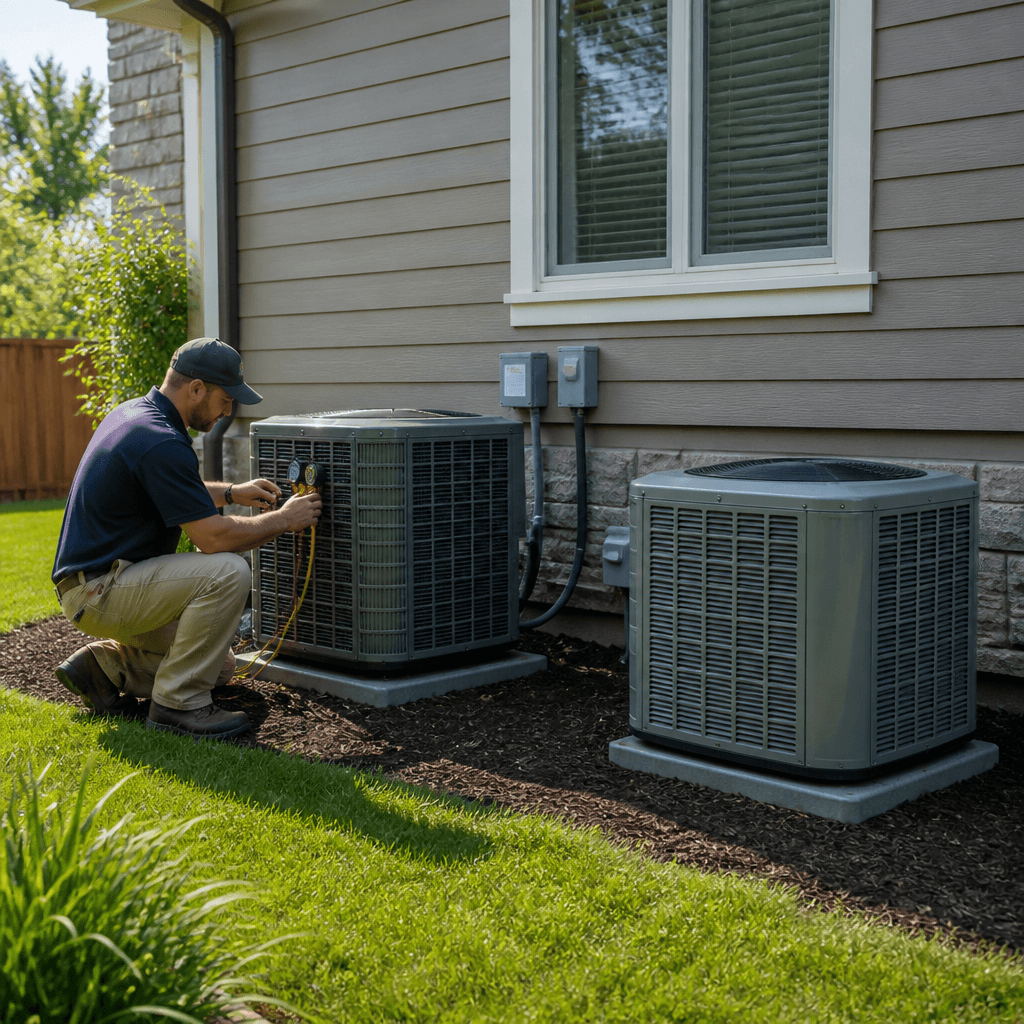
• Heat pumps and central AC systems both cool homes in summer, but they work in different ways and fit different needs. The best choice depends on comfort goals, energy use, and whether the home also needs heating later in the year.
• Uneven cooling, sticky indoor air, long run times, or rising bills can signal that your system needs attention. Small issues often show up before bigger problems, so early service can help avoid midsummer discomfort.
• Simple checks like airflow, system size, and filter care can make a big difference in summer comfort. Knowing when to choose a heat pump vs AC for summer cooling can help homeowners make a smarter, faster decision.
Hot Weather Cooling Choices Matter
Summer heat can make a weak cooling system feel like a real problem fast. If a home is not getting steady comfort, energy bills can climb and rooms can start to feel uneven. That is why many homeowners compare heat pump vs AC for summer cooling before the hottest days settle in. We help local families make smart choices with reliable service from our heating and cooling team when they need it most.
A cooling system should do more than turn on and off. It should keep indoor temperatures steady, handle humid days, and run in a way that makes sense for the home. In July, waiting too long can leave you stuck with bigger repairs and more discomfort. We want to help you spot the signs early so you can act before the heat takes over.
The right system depends on how your home is built and how you use it day to day. Some homes do well with a heat pump, while others still rely on a standard AC setup for the best summer comfort. When people ask about heat pump vs AC for summer cooling, the real answer starts with how each system works and what your space needs. A little information now can save a lot of stress later.
How Each System Handles Summer Heat
A heat pump moves heat out of your home, and that process works well in warm weather. A central AC system also removes indoor heat, but it is built only for cooling. When comparing the two, the best choice often comes down to efficiency, comfort goals, and whether the home also needs heat in cooler months.
For summer use, both systems can perform well when they are sized right and kept in good shape. A heat pump can be a smart fit for homes that want one system for both heating and cooling, while AC may be the better match for homes that already have a separate furnace. If you want to learn more about system options, our heat pump services can help guide the way.
Tips from the Pros
🌡️ Tip 1: Check How Evenly Your Home Cools
If one room feels much warmer than another, your system may not be matched well to the house. Uneven cooling can point to sizing issues, airflow problems, or a system that is starting to lose performance.
🧊 Tip 2: Compare Energy Use, Not Just Equipment Type
A heat pump and an AC can both cool a home, but their operating costs may differ based on how efficient they are. Look at how often the system runs and whether it keeps up during the hottest part of the day.
🔍 Tip 3: Pay Attention to Humidity
Comfort in summer is not only about temperature. If the air feels sticky indoors, the system may not be removing moisture well enough, which can make the home feel warmer than it is.
🛠️ Tip 4: Keep Filters Clean and Airflow Clear
Dirty filters can make any cooling system work harder than it should. Clean airflow helps the unit move air more easily and supports more steady summer cooling.
📏 Tip 5: Make Sure the System Is the Right Size
A unit that is too small may struggle to keep up, while one that is too large may short cycle and cool unevenly. Proper sizing matters a lot when comparing heat pump vs AC for summer cooling.
🔄 Tip 6: Think About Year-Round Use
If you want one system for both winter and summer, a heat pump may offer more value. If your home already has dependable heating, a standard AC can still be a simple and effective choice for summer comfort.
⚙️ Tip 7: Listen for New Noises or Long Run Times
Loud sounds, short cycling, or runs that never seem to end can mean the system is under strain. Those signs often show up before a full breakdown, so they are worth taking seriously.
📋 Tip 8: Schedule Service Before Peak Heat Hits
A spring or early summer check gives you time to fix small issues before the hottest days arrive. That is especially helpful when deciding between heat pump vs AC for summer cooling, since the condition of the equipment affects the result.
Frequently Asked Questions
Is a heat pump good for summer cooling?
Yes, a heat pump is good for summer cooling because it pulls heat out of the home and moves it outside. It can work very well in warm weather when it is sized correctly and kept in good condition.
Which is better for summer, heat pump vs AC for summer cooling?
It depends on the home and the owner’s goals. A heat pump is a strong choice if you want one system for both heating and cooling, while AC may be the better fit if you already have a separate heating setup.
Does a heat pump cool as well as an AC?
Yes, a heat pump can cool just as well as an AC when both systems are properly installed and maintained. The real difference is that a heat pump can also heat the home during colder months.
What signs show my cooling system needs service?
Yes, uneven temperatures, weak airflow, longer run times, and higher energy bills can all point to a problem. These signs often mean the system needs attention before the issue gets worse.
How do I choose between a heat pump and AC?
Start by looking at your home’s layout, your current heating setup, and how much year-round flexibility you want. If you want help deciding, heat pump vs AC for summer cooling should be based on comfort, efficiency, and how your home is used each day.
Stay Cool With the Right System
Choosing between a heat pump and AC is not just about equipment. It is about how well your home stays cool, how much energy it uses, and how ready it is for the hottest days of summer. We believe the best choice is the one that fits your home and keeps your family comfortable when July heat peaks.
If you are still weighing your options, a trusted local HVAC team can help you look at the facts and make the right call. The sooner you review your system, the easier it is to avoid mid-summer problems and stay ahead of repairs. For more updates and helpful home comfort tips, follow us on social media.