• Prepare your ductless mini split before cold weather by checking airflow, cleaning filters, and testing heat mode. Small issues can turn into bigger heating problems if they are ignored too long.
• Learn the simple steps that help a ductless mini split work better in winter, including sealing drafts, keeping the outdoor unit clear, and watching for warning signs. These habits can improve comfort and reduce strain on the system.
• Avoid common DIY mistakes like skipping basic maintenance, leaving the wrong settings on, or ignoring weak airflow and strange sounds. Knowing when to call for service can help keep your home warm and your system running safely.
Why Your Home Needs Heating Now
When temperatures start to dip, a ductless mini split can make the difference between a cozy home and a cold one. Many homeowners wait until the first real chill to check their system, and that delay can lead to weak airflow, uneven rooms, or a unit that will not keep up. If you want reliable comfort before the season settles in, this is the right time to check our ductless mini split services and make sure your system is ready. A little attention now can help you avoid a stressful breakdown when you need heat the most.
A ductless system works well for homes that need room-by-room comfort and steady warmth. It can also be a smart fit for spaces where adding new ductwork would be difficult or costly. When the weather turns cooler, small issues can become bigger problems faster than expected. That is why we always tell homeowners to look at performance early instead of waiting for a complete loss of heat.
Fall is a good reminder that heating season is close, and your system should be ready before that first cold snap. A unit that runs well now is more likely to stay dependable through the colder months. If your rooms feel uneven or the system seems to run harder than usual, it is worth taking a closer look. The sooner we address it, the easier it is to keep your home warm and comfortable.
How To Get It Ready
A ductless mini split for winter heating works best when it is clean, set correctly, and free of obvious problems. We focus on simple checks first because small issues often affect how well the system heats your home. The goal is steady comfort, lower strain on the unit, and fewer surprises once colder weather settles in.
Using the system the right way matters just as much as maintenance. When homeowners know what to look for, they can catch problems early and make better choices about when to call for service. That helps protect the equipment and keeps the heating process simple during the season.
Step-by-Step Heating Prep
🔍 Step 1: Check the indoor unit
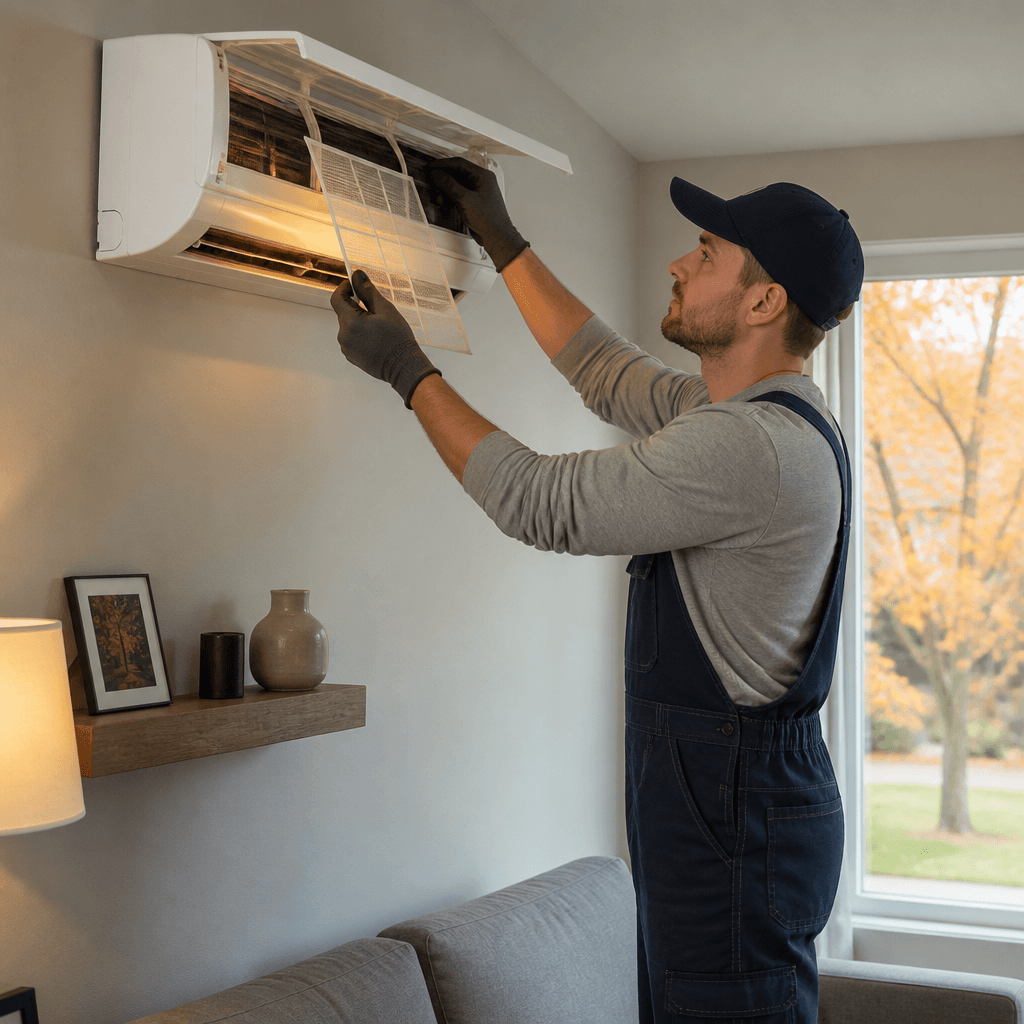
Look at the indoor head for dust, blocked airflow, or signs that the unit is not operating normally. Clean airflow is important because the system needs clear passage to move warm air through the room. If the unit looks dirty or weak, that is often the first sign it needs attention.
🧼 Step 2: Clean the filters
Remove the filters and clear away dust or buildup according to the manufacturer’s instructions. Clean filters help the system move air more easily and reduce strain during heating. This simple step can make a real difference in comfort and performance.
🌡️ Step 3: Set the thermostat correctly
Switch the system to heat mode and choose a temperature that keeps the home steady instead of constantly changing it. Large swings in settings can make the unit work harder than needed. A stable setting helps the system maintain comfort more efficiently.
🚪 Step 4: Seal nearby drafts
Check windows, doors, and other openings near the heated space for cold air leaks. Even a strong heating system can struggle if warm air is escaping and cold air is coming in. Closing those gaps helps the unit do its job better.
🧽 Step 5: Clear the outdoor area
Make sure the outdoor unit has space around it and is free from leaves, dirt, or other debris. Proper clearance helps the system run as designed and supports steady operation in colder weather. A blocked unit can have a harder time working well when temperatures drop.
👂 Step 6: Listen for unusual sounds
Turn the system on and pay attention to buzzing, rattling, or other sounds that do not seem normal. Unusual noise can point to loose parts or a problem that needs service. Catching it early can prevent more serious trouble later.
💨 Step 7: Test warm airflow
Run the system long enough to see whether warm air is coming out evenly. If one room feels much colder than another, the issue may be with airflow, settings, or system balance. A quick test helps you know whether the unit is ready for steady use.
📞 Step 8: Schedule service if needed
If the system is slow to heat, makes odd noises, or does not respond well, set up a professional check. Heating equipment often shows small warning signs before a bigger failure happens. A trained technician can spot problems that are easy to miss at home.
Common DIY Mistakes To Avoid
Many homeowners try to handle heating prep on their own and end up skipping the most important checks. That usually happens because the system seems simple at first, or because the problem does not look urgent yet. Avoiding these mistakes can help the unit work better and keep your home comfortable through the season.
⚠️ Mistake 1: Ignoring dirty filters
This happens when people assume the system can still run fine even with dust buildup. Dirty filters can slow airflow and make the unit work harder than it should. Clean them regularly so the system can move heat the way it is supposed to.
❌ Mistake 2: Leaving the thermostat on the wrong mode
Sometimes homeowners forget to switch from cooling to heating, or they change settings too often. That can leave the system acting like it is not working when the real issue is just the mode setting. Always confirm the unit is set to heat before thinking there is a bigger problem.
🚫 Mistake 3: Blocking the outdoor unit
Leaves, dirt, and yard debris can collect around the outdoor section and reduce performance. This often happens because the unit is outside and easy to overlook during seasonal changes. Keep the space around it clear so airflow stays open.
⚠️ Mistake 4: Waiting too long to test the system
People often wait until the first cold night to see if the heat works. By then, any problem becomes more stressful and harder to fix quickly. Test the system early so you have time to address issues before you really need it.
❌ Mistake 5: Ignoring odd sounds or weak airflow
Small noises or uneven heating are easy to brush off when the system still seems to run. Those warning signs usually mean something is not working as well as it should. The best way to prevent bigger trouble is to act as soon as the problem shows up.
Frequently Asked Questions
Can a ductless mini split heat a home in winter?
Yes, a ductless mini split can heat a home in winter when it is sized and maintained correctly. It is designed to provide steady indoor comfort, and many homeowners use it as a main or backup heat source during colder months.
How do I know if my ductless mini split is ready for winter?
Yes, you can tell by checking airflow, filter cleanliness, and how quickly the system warms the room. If the unit runs longer than usual, makes strange sounds, or heats unevenly, it may need service before colder weather gets worse.
How often should I clean the filters?
Yes, filters should be checked and cleaned regularly to keep airflow moving well. In many homes, monthly checks are a smart habit, especially when the system is used often during the heating season.
Why is my ductless mini split not blowing warm air?
Yes, the issue may be as simple as the wrong setting, a dirty filter, or blocked airflow. It can also point to a maintenance problem that needs a trained technician to inspect more closely.
Is ductless mini split for winter heating energy efficient?
Yes, a ductless mini split for winter heating can be an efficient way to warm specific rooms or zones. It works best when the system is clean, set properly, and used in a home that is sealed well against drafts.
Ready for the Cold Ahead
Getting your heating system ready before temperatures drop can save time, stress, and discomfort later. A ductless mini split for winter heating works best when it is clean, tested, and free of small problems that could turn into bigger ones. We always recommend taking care of these checks early so your home stays warm when it matters most.
If your system needs attention or you want a professional eye on it before winter arrives, we are here to help. Taking action now is the best way to protect comfort, avoid surprises, and keep your home steady through the season. You can also follow us on social media for more helpful updates.